
Cast iron filet mignon is the whole steakhouse experience pulled indoors and made simple: a hard sear in a screaming-hot skillet, then a quick finish in a 500°F oven that brings the center up to a clean, blushing medium rare. No grill, no fire to manage, no reservation. Just the most tender cut there is, a heavy pan, and a hot oven doing the patient part for you.

Filet is lean, mild, and cut tall, which makes it the easiest steak to overthink and the easiest to overcook. The fix is order of operations. Sear first for the crust while the skillet is at its hottest, then move the whole pan into the oven where dry, even heat finishes the inside without pushing the outside any further. It is the same logic behind a great blackened filet mignon or a slow sous vide ribeye - control the cook, then finish with confidence. Pour something cold, let the oven work, and you are ten minutes from a plate that looks like it came off a white tablecloth.
Watch the full reel on Instagram → @whisk__and__wine
Jump to:
- Why You'll Love This Cast Iron Filet Mignon
- Cast Iron Filet Mignon Ingredients
- Cast Iron Filet Mignon Time & Temp Calculator
- How to Make Cast Iron Filet Mignon
- Butter or Oil? How to Baste a Filet
- Substitutions
- Variations
- Equipment
- Storage
- Top Tip - Pull It Early
- More Steak Dinners to Try
- More Beef & Steak Recipes
- Cast Iron Filet Mignon (Seared + 500°F Oven, Medium Rare)
- 💬 Reviews
Why You'll Love This Cast Iron Filet Mignon
- The steakhouse method, made foolproof - sear for the crust, oven for the cook.
- No grill required. A fully indoor cook, ideal for a condo, a rental kitchen, or a quiet night in.
- Fast. From cold skillet to rested steak is about 30 minutes, most of it hands-off.
- Flaky sea salt and a melting medallion of compound butter turn a simple seared filet into an occasion.
- The thermometer takes out the guesswork. Dial in your thickness and doneness below and pull at the exact number.
Cast Iron Filet Mignon Ingredients
You only need a handful of things, and the quality of each one shows. See the recipe card below for exact quantities.
- Center-cut filet mignon steaks, about 1.5 inches thick
- High-smoke-point oil (avocado or grapeseed) for the sear
- Unsalted butter, garlic cloves, and fresh thyme or rosemary for the baste
- Kosher salt and freshly cracked black pepper
- Flaky finishing salt - Florida Pure Sea Salt Pure Flaked
- Compound butter to finish - Cow's Rule Bleu Cheese & Chive is the steak-lover's pick
Cast Iron Filet Mignon Time & Temp Calculator
Set your thickness and target doneness and the calculator returns your sear time, oven finish time, the temperature to pull at, and where the steak lands after it rests. The recipe is built around a 1.5-inch center-cut filet at medium rare, but the numbers move with the cut.
Find Your Cook Time
Set thickness and target doneness. The calculator returns your cast iron sear time per side, the finish time in a 500°F oven, the temperature to pull at, and the final internal after the steak rests.
Why sear first, then finish in the oven
Filet mignon is lean and cut tall, so the danger is a gray band of overcooked meat around a cold center. Build the crust first while the skillet is rocket-hot — one to two minutes a side is all it takes to get that deep brown sear. Then move the whole skillet into a 500°F oven, where dry, all-around heat brings the center up evenly without pushing the crust any further. Pull a few degrees early and let carryover finish the job during the rest. Crust from the iron, even cook from the oven, juicy center from the rest.
USDA recommends 145°F internal for whole-cut beef. Medium rare at 130–135°F is a culinary standard. Pregnant, immunocompromised, very young, or elderly diners should cook to 145°F.
How to Make Cast Iron Filet Mignon
Two stages, one skillet. The sear builds the crust; the oven brings the inside up to medium rare. Exact times and temperatures are in the recipe card.
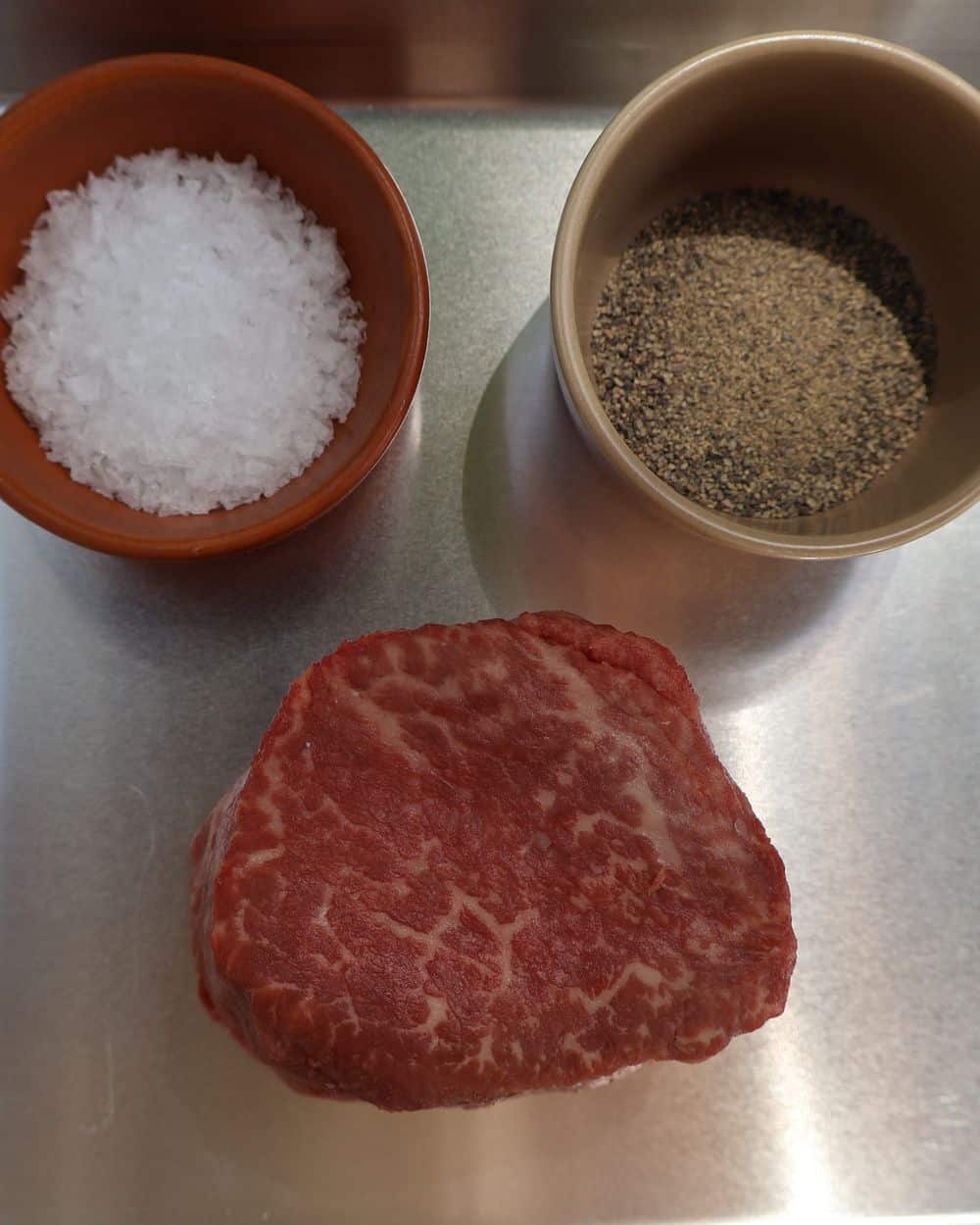
Temper, dry, and season
Pull the filets out of the fridge 30 to 45 minutes ahead and pat them bone-dry. A dry surface is the difference between a crust and a steam bath. Season generously with kosher salt and pepper on all sides, and set the oven to 500°F so it is fully up to temperature before the sear.
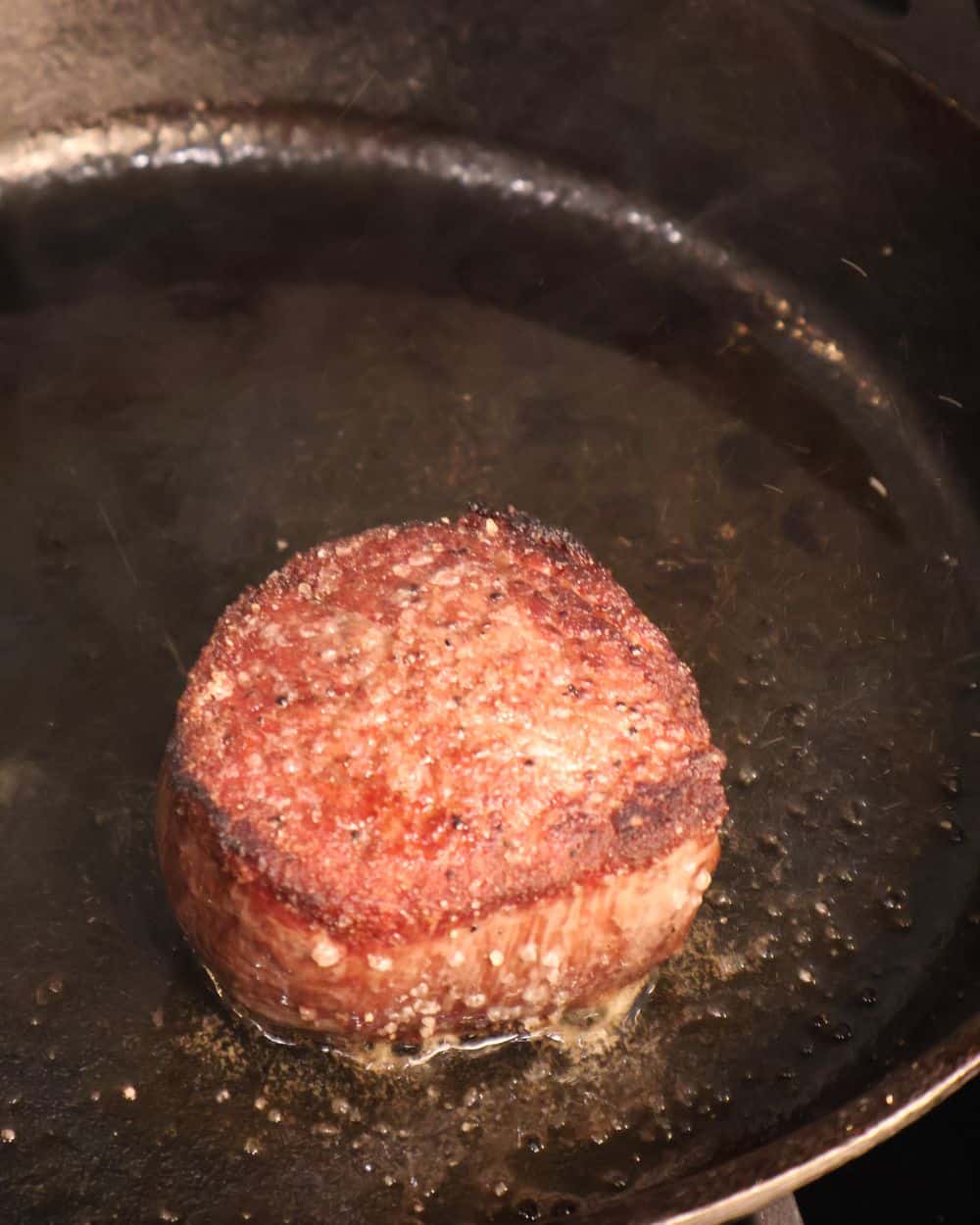
Sear the crust
Heat the cast iron over high heat until it just begins to smoke. Add a thin film of high-smoke-point oil, lay the filets down, and do not touch them for one to two minutes. Flip and sear the second side, then use tongs to stand them on their edges and brown the sides. You are building color, not cooking the inside.
Baste, if you like
For a steakhouse finish, drop butter, smashed garlic, and a few sprigs of thyme into the pan at the end of the sear. Tilt the skillet and spoon the foaming butter over the filets for the last 30 to 60 seconds. Add the butter late so it does not burn at high heat - or skip it entirely and let a finishing pat of compound butter carry the butter flavor instead.
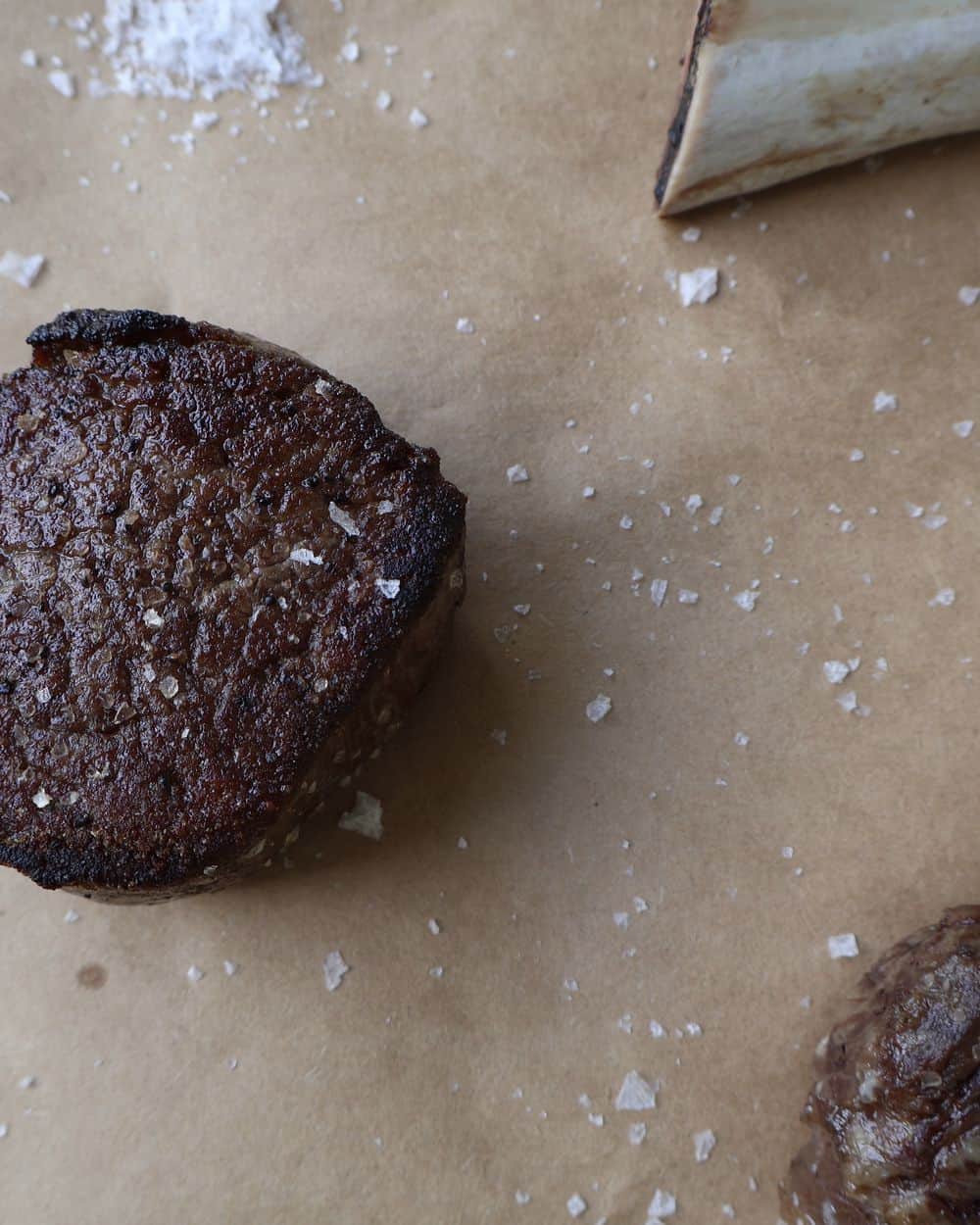
Finish in the 500°F oven
Slide the whole skillet into the 500°F oven. For a 1.5-inch filet, that is about 4 to 5 minutes to a medium-rare pull. Check the internal temperature in the side of a steak and pull at 120 to 125°F. Do not cook to your final number - carryover finishes the last ten degrees.
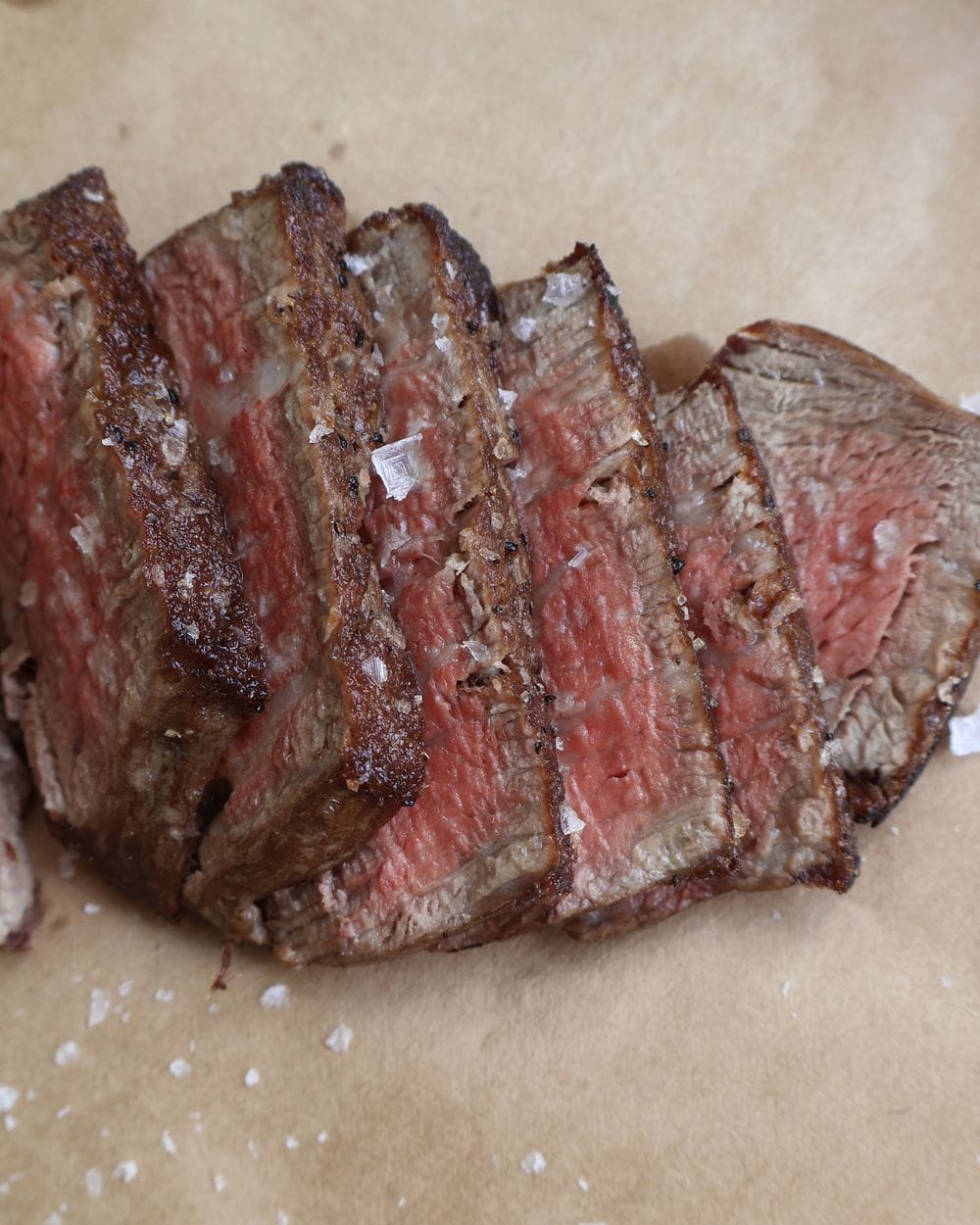
Rest and finish
Move the filets to a board and rest 5 to 10 minutes - carryover takes them to a final 130 to 135°F for medium rare. Top each with flaky Florida Pure Sea Salt and a medallion of Cow's Rule compound butter, and let it melt over the top before serving.
Butter or Oil? How to Baste a Filet
This is the one real decision, and there is no wrong answer.
- Oil only. Sear in avocado or grapeseed oil and leave it there. It runs hotter without scorching, gives you the cleanest, darkest crust, and lets the finishing butter and salt lead. The simplest, most forgiving path.
- Butter baste. After the sear, add butter, smashed garlic, and thyme, tilt the pan, and spoon the foaming butter over the steak. The classic steakhouse move - nutty, aromatic, glossy. Add the butter at the end of the sear, not the start, so it does not burn.
- The hybrid. Sear in oil for the crust, then add a knob of butter for the last 30 to 60 seconds for the aroma. Best of both, and what we would reach for most nights.
Substitutions
- No avocado or grapeseed oil? Any neutral, high-smoke-point oil works - refined canola or light olive oil. Skip extra-virgin and plain butter for the sear; both burn before the skillet is hot enough.
- No fresh herbs? Thyme and rosemary are classic, but the baste is good with just garlic. Dried herbs scorch, so leave them out.
- No compound butter on hand? A pat of good unsalted butter mashed with a little garlic and parsley gets you most of the way. The Cow's Rule tubs just save you the step.
- Different finishing salt? Any flaky sea salt works in a pinch, but the larger, crisp flakes of Florida Pure Sea Salt give you that gentle crunch you want on the first bite.
Variations
- Surf-side finish. A spoonful of garlic-herb compound butter melting into a just-rested filet, eaten on the deck after a day on the water - that is the whole brief.
- Au poivre. Swap the bleu cheese butter for Cow's Rule Au Poivre, built on beef demi-glace and peppercorns, for a steak-frites-style finish.
- Garlic and herb. For a cleaner, brighter finish that lets the filet lead, the Garlic & Herb compound butter is the move.
- Compound butter board. Set out two or three Cow's Rule butters and let everyone choose - Bleu Cheese & Chive, Au Poivre, Garlic & Herb. Pass the board around.
Storage
Refrigerate leftover filet in an airtight container for up to 3 days. Reheat gently - a hard reheat overcooks a steak that is already at temperature, so warm slices in a low 250°F oven just until heated through, or eat them cold, sliced thin. Cooked filet does not freeze well; freeze the raw steaks instead and thaw fully in the fridge before cooking.
Top Tip - Pull It Early
The most common filet mistake is cooking it to temperature in the pan or oven. Do not. Pull at 120 to 125°F for medium rare and let carryover and a real rest finish the last ten degrees. A filet that comes out of the oven already at 135°F will be past medium rare by the time it hits the plate.
The skillet handles the crust. The oven handles the cook.
One to two minutes per side over high heat, plus a quick roll onto the edges. You're building a crust, not cooking the inside - the 500°F oven does that part. For a 1.5-inch filet, follow the sear with about 4 to 5 minutes in the oven for a medium-rare pull.
Pull at 120 to 125°F. After a 5 to 10 minute rest, carryover brings it to a final 130 to 135°F, which is a true medium rare. Use an instant-read thermometer in the side of the steak toward the center, and use the calculator above to match your thickness.
Yes - that's the whole point of this method. The crust comes from the cast iron skillet and the even cook comes from the oven, so you never need an outdoor grill. It's an ideal cook for a condo, an apartment, or a beach rental without a grill on the deck.
You can, and it adds a nutty, aromatic richness, but it's optional. If you baste, add the butter, garlic, and herbs at the end of the sear so the butter doesn't burn at high heat. For the cleanest, darkest crust, sear in oil only and let a finishing pat of compound butter carry the butter flavor instead.
More Steak Dinners to Try
If this filet earned a spot in the rotation, these are the cuts to cook next - same idea, same payoff: control the cook, then finish with confidence.


More Beef & Steak Recipes
From a special-occasion wagyu strip steak to a low-and-slow sous vide ribeye, here is where to go deeper on cooking great beef at home.

Cast Iron Filet Mignon (Seared + 500°F Oven, Medium Rare)
- Total Time: 30 minutes
- Yield: 2 filets (serves 2) 1x
Description
The steakhouse method made simple at home - center-cut filet mignon seared in a screaming-hot cast iron skillet, then finished in a 500°F oven to a perfect medium rare. Topped with flaky sea salt and a melting medallion of compound butter.
Ingredients
- For the steaks:
- 2 center-cut filet mignon steaks, about 1.5 inches thick (6-8 oz each)
- 1 teaspoon kosher salt
- ½ teaspoon freshly cracked black pepper
- 1 tablespoon avocado oil or grapeseed oil
- For the baste (optional):
- 2 tablespoons unsalted butter
- 2 garlic cloves, smashed
- 2 sprigs fresh thyme or rosemary
- To finish:
- Flaky finishing sea salt (Florida Pure Sea Salt Pure Flaked)
- 2 tablespoons compound butter (Cow's Rule Bleu Cheese & Chive, Au Poivre, or Garlic & Herb)
 Get Recipe Ingredients
Instructions
- Take the filets out of the fridge 30 to 45 minutes before cooking. Pat them completely dry with paper towels.
- Preheat the oven to 500°F.
- Season the steaks all over with the kosher salt and black pepper.
- Set a cast iron skillet over high heat until it just begins to smoke, about 5 minutes.
- Add the avocado oil and swirl to coat the pan.
- Lay the filets in the skillet and sear without moving them for 1 to 2 minutes, until a deep brown crust forms.
- Flip the filets and sear the second side for 1 to 2 minutes.
- Use tongs to stand the filets on their edges and sear the sides for 30 seconds each.
- Optional: add the butter, smashed garlic, and thyme to the pan. Tilt the pan and spoon the foaming butter over the steaks for 30 to 60 seconds.
- Transfer the whole skillet to the 500°F oven. Roast for 4 to 5 minutes for medium rare.
- Check the internal temperature in the side of a steak. Pull at 120 to 125°F for medium rare.
- Move the filets to a board or plate and rest for 5 to 10 minutes.
- Top each filet with flaky sea salt and a medallion of compound butter just before serving.
Notes
- Pull early - filets keep cooking as they rest. Pulling at 120-125°F lands you at a final 130-135°F for medium rare. Use the in-post Time & Temp Calculator to match your thickness and target doneness.
- For the cleanest crust, sear in oil only and skip the baste; let the finishing compound butter carry the butter flavor.
- Even thickness matters more than weight - ask for true center-cut filets so both steaks finish at the same time.
- Prep Time: 10 minutes
- Cook Time: 12 minutes
Nutrition
- Serving Size: 1 filet
Comments
No Comments