
This basil walnut pesto recipe is one of those things I make on repeat and never get tired of. It comes together in about five minutes, tastes like you spent all afternoon in the kitchen, and my kids are completely obsessed with it. I'm talking scraping-the-jar-with-a-spoon obsessed. It's bright, a little nutty, packed with Parmesan, and the lemon gives it this gorgeous freshness that sets it apart from your average pesto.

If you're the kind of person who likes to have something versatile stashed in your fridge, this is it. Toss it with pasta, spread it on crusty bread, drizzle it over grilled chicken, or spoon it onto a roasted vegetable tortellini salad - it works with everything. I created this pesto specifically because I wanted a base recipe that could anchor a few different meals throughout the week, and it does exactly that. Stay tuned for my blackened Parmesan shrimp and lemon herb chicken variations that both build on this pesto - they're coming soon and you're going to want this recipe ready to go.
Watch the full reel on Instagram → @whiskandwine
Jump to:
- Why You'll Love This Basil Walnut Pesto
- What You'll Need for Basil Walnut Pesto
- How to Make Basil Walnut Pesto
- Delicious Ways to Use This Pesto
- Substitutions for Basil Walnut Pesto
- Variations to Try
- Equipment
- How to Store Basil Walnut Pesto
- More from Whisk & Wine
- Pantry Staples You'll Make on Repeat
- 📖 Recipe
- 💬 Reviews
Why You'll Love This Basil Walnut Pesto
- It's done in five minutes. From whole ingredients to jar-ready pesto in the time it takes your pasta water to boil. This is the definition of high-impact, low-effort cooking.
- Walnuts are easier on the wallet. Pine nuts are beautiful but they're also wildly expensive. Walnuts give you that same creamy, nutty richness at a fraction of the price - and honestly, I prefer the flavor.
- The lemon changes everything. Most pesto recipes skip citrus entirely, but that hit of fresh lemon juice and zest takes this from good to absolutely crave-worthy. It brightens the whole thing up.
- It's endlessly versatile. Pasta, sandwiches, pizza, grilled meats, roasted veggies, eggs - I have yet to find something this pesto doesn't make better.
- Kids go crazy for it. My two can't get enough of this stuff. It's one of those rare recipes where I don't have to make a separate version for the adults.
What You'll Need for Basil Walnut Pesto
This pesto keeps things simple - just a handful of fresh ingredients and a food processor. See the recipe card below for exact quantities.
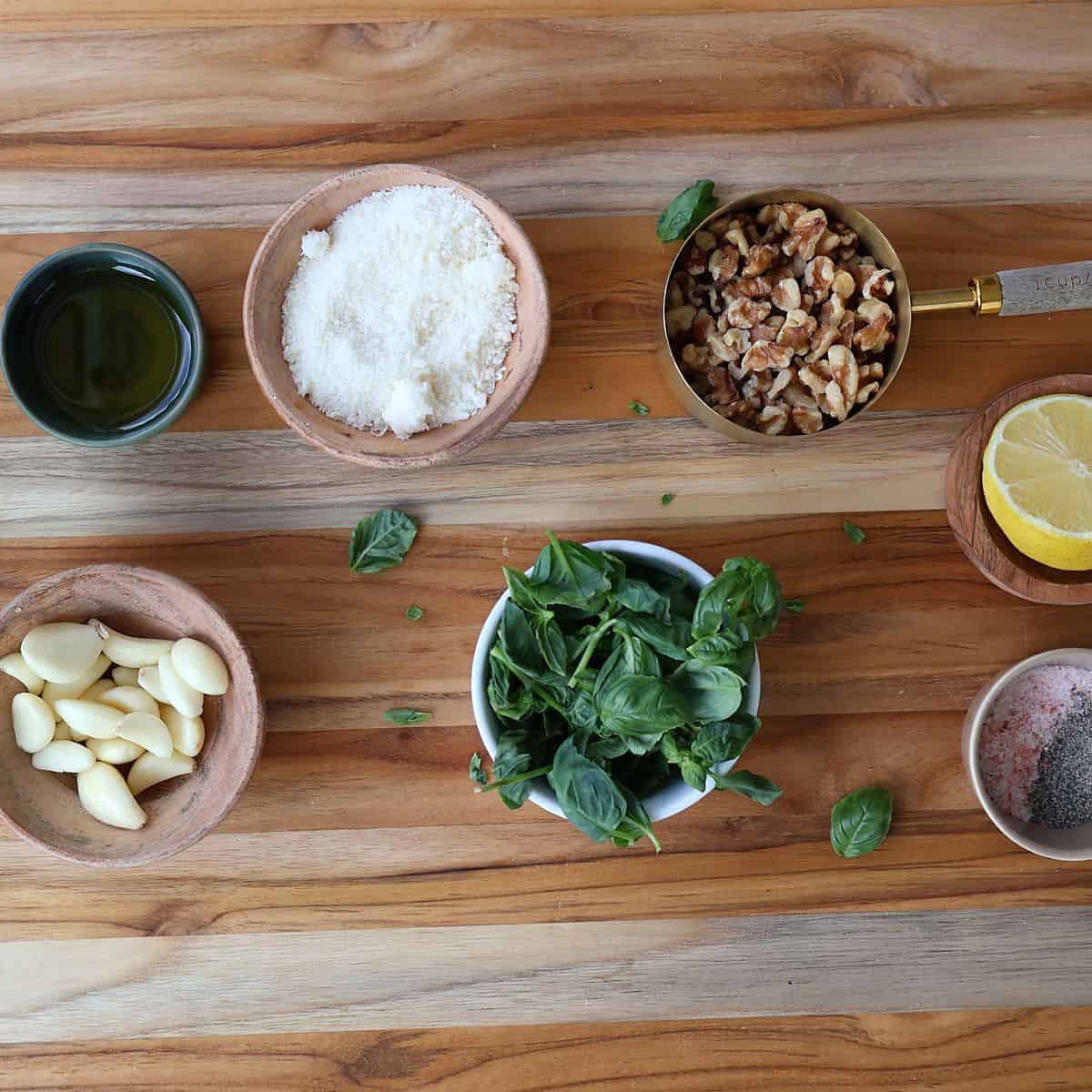
- Walnuts - the base of this pesto and what gives it that gorgeous, slightly earthy richness
- Fresh basil - you'll need a generous amount here, six full packages for a truly vibrant pesto
- Parmesan cheese - freshly grated is a must, it melts right into the sauce and adds that salty, savory depth
- Garlic cloves - raw garlic gives the pesto a little bite that balances all the basil
- Lemon juice and zest - this is the secret weapon that makes this pesto taste so fresh and bright
- Salt and pepper - just enough to bring everything together
- Extra-virgin olive oil - drizzled in slowly at the end to create that silky, spoonable texture
See recipe card below for exact quantities.
How to Make Basil Walnut Pesto
This is one of those recipes where you'll wonder why you ever bought the jarred stuff. Two steps, one food processor, and five minutes of your time.
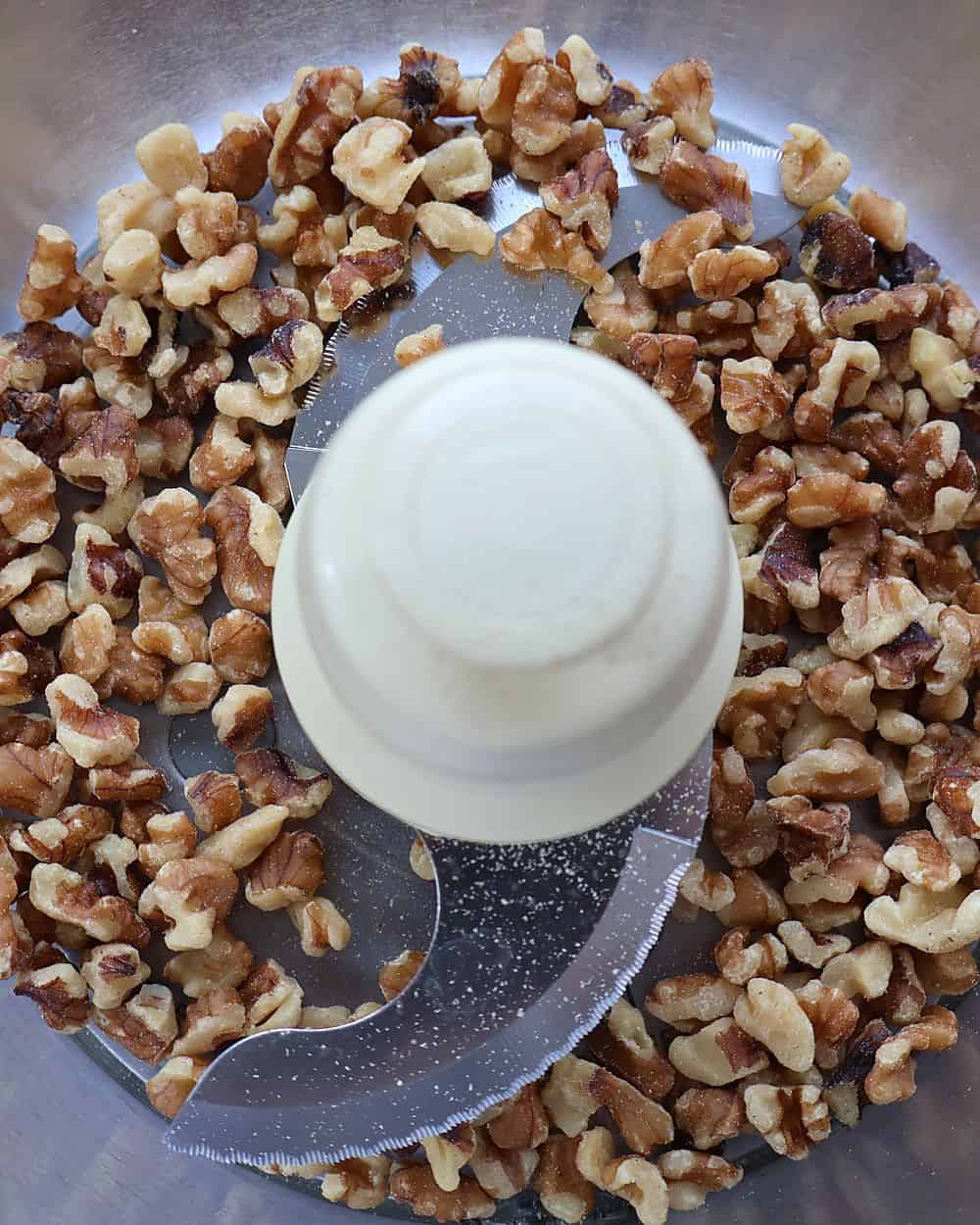
Step 1: Pulse the Walnuts. Add the walnuts to your food processor and pulse them a few times until they're coarsely chopped - you want some texture here, not walnut dust. About 8-10 pulses should do it. This gives the pesto that gorgeous, slightly chunky base that makes every bite interesting.
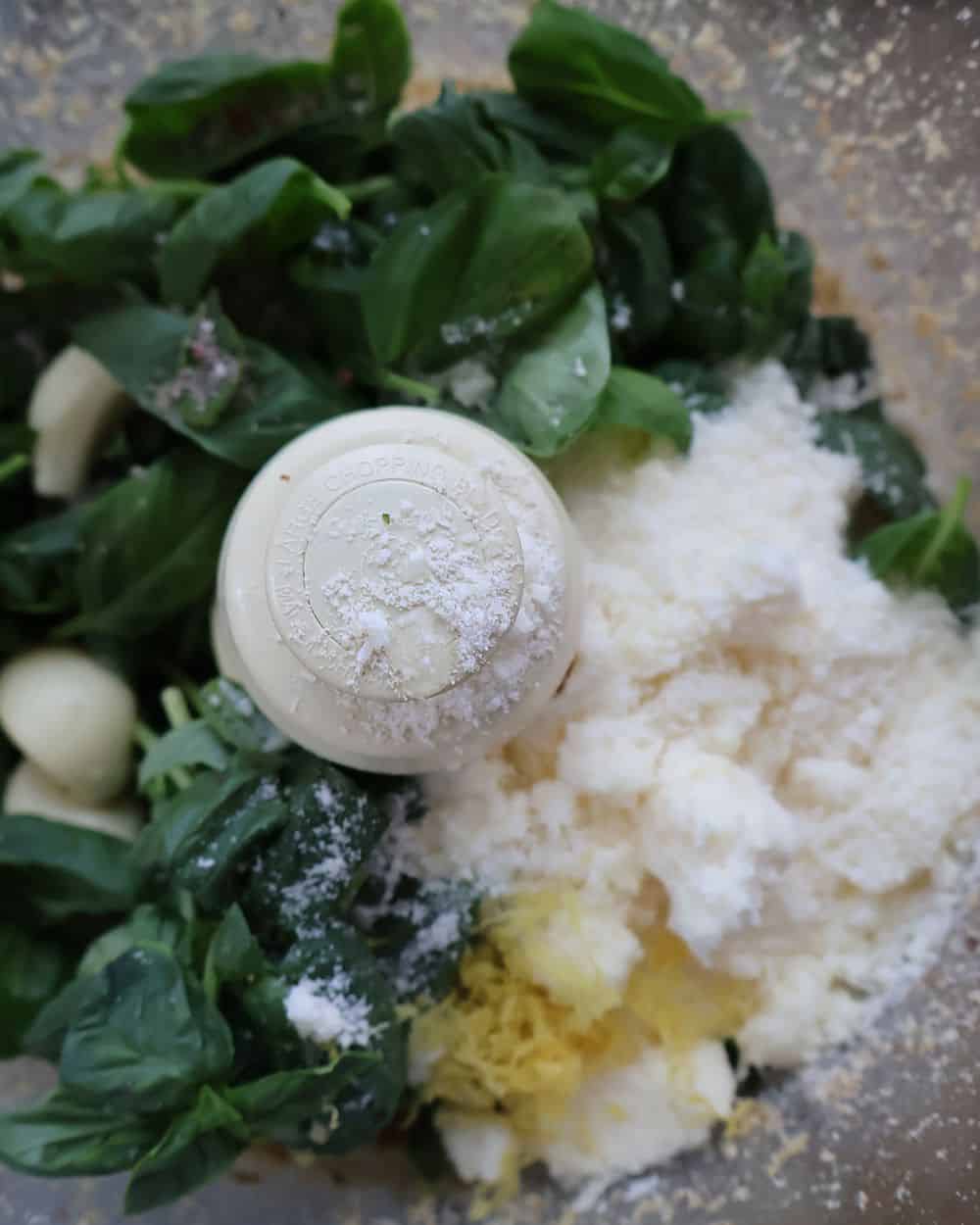
Step 2: Add the Basil and Aromatics. Tear the basil leaves right off the stems and add them to the food processor along with the Parmesan, garlic cloves, lemon juice, lemon zest, salt, and pepper. Pulse everything together until it's well combined but still has a little bit of texture - you're not making a smoothie here.
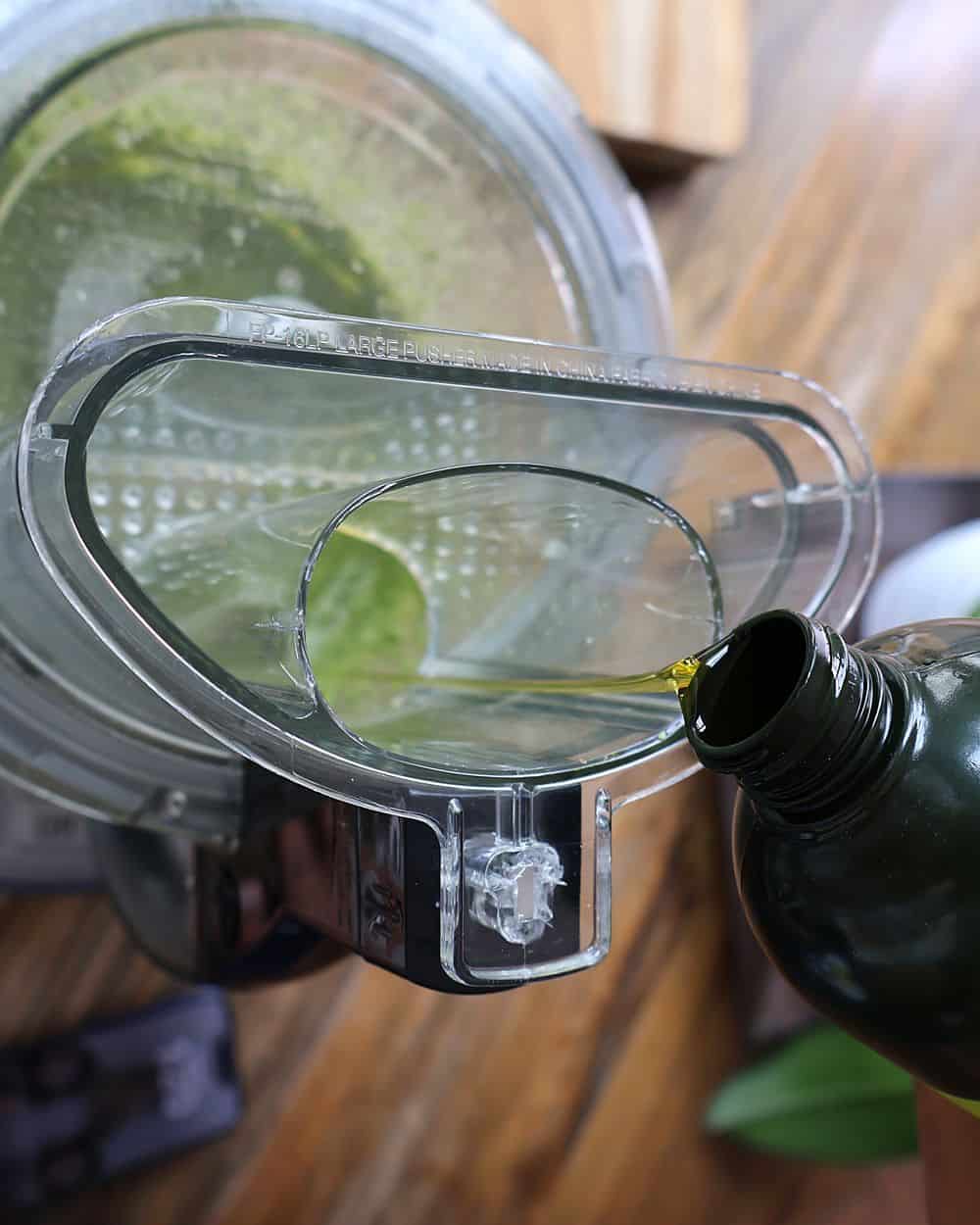
Step 3: Stream in the Olive Oil. With the food processor running, slowly drizzle in the extra-virgin olive oil through the feed tube. This is the step that brings everything together into that silky, spoonable consistency. Keep processing for about 20-30 seconds after all the oil is in, scraping down the sides once if needed. Taste and adjust salt and pepper.
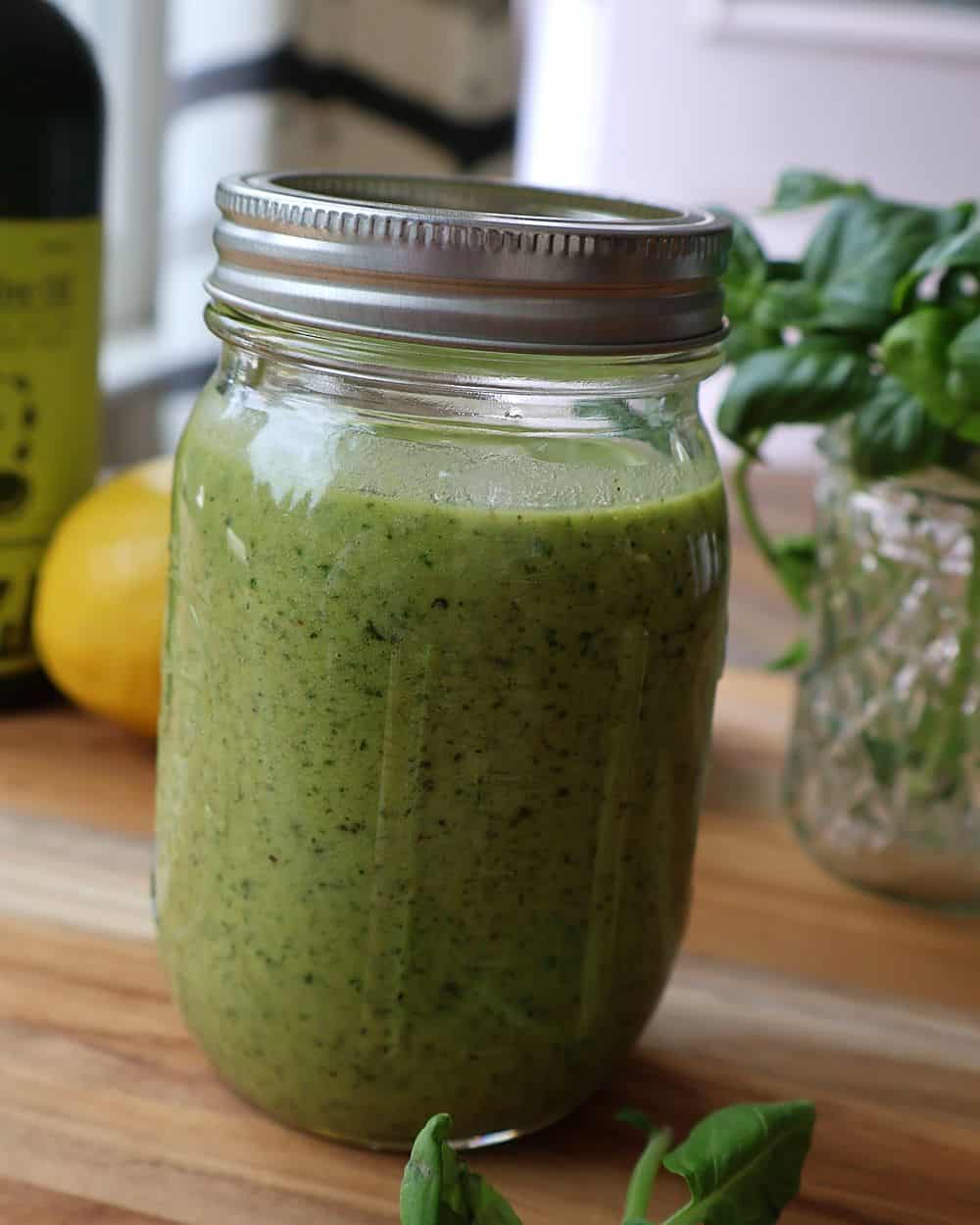
Step 4: Serve, Store, or Get Creative. Transfer the pesto to a jar or airtight container. Use it right away tossed with hot pasta, spread on a sandwich, or dolloped onto grilled chicken - or stash it in the fridge for the week ahead. A thin layer of olive oil on top keeps it bright green for days.
Delicious Ways to Use This Pesto
One of my favorite things about this pesto is that it's not a one-trick pony. Here are some of the ways I use it throughout the week:
- Tossed with pasta. Cook your favorite noodle, reserve a splash of pasta water, and stir in a few generous spoonfuls. The pasta water loosens it into a silky sauce.
- As a pizza base. Swap out red sauce for a thin layer of pesto before adding your toppings. It's incredible with mozzarella, cherry tomatoes, and a little arugula on top.
- On grilled chicken or shrimp. Spoon it over any grilled protein - my blackened Parmesan shrimp variation uses this exact pesto and it's unreal.
- Stirred into eggs. A spoonful of pesto scrambled into your morning eggs is a game-changer. Trust me on this one.
- As a sandwich spread. Replace mayo with pesto on your next sandwich or wrap. It adds so much more flavor.
- Drizzled over roasted vegetables. Roasted broccoli, cauliflower, sweet potatoes - a drizzle of pesto makes them restaurant-worthy.
- Mixed into grain bowls. Quinoa, farro, rice bowls - pesto ties everything together.
Substitutions for Basil Walnut Pesto
This recipe is pretty flexible. Here are some easy swaps if you need them:
- Walnuts → pine nuts, cashews, or almonds. Pine nuts are the classic choice and give a softer flavor. Cashews make it extra creamy. Almonds add a slightly sweeter, toasty note.
- Parmesan → Pecorino Romano. Pecorino is sharper and saltier, so reduce the added salt if you swap. You can also do a 50/50 blend for the best of both worlds.
- Basil → arugula or spinach (partial swap). If basil is hard to find or you want a peppery twist, swap up to half the basil for arugula. Spinach makes it milder and gives a deeper green color.
- Lemon → skip it for a more traditional pesto. The lemon is what makes this recipe special, but if you want a more classic Genovese-style pesto, you can leave it out.
- Dairy-free → nutritional yeast. Use 3-4 tablespoons of nutritional yeast in place of the Parmesan for a dairy-free version that still has that savory, cheesy flavor.
Variations to Try
Once you have this base pesto down, the possibilities are endless:
- Sun-dried tomato pesto. Add ⅓ cup of oil-packed sun-dried tomatoes to the processor with the basil for a richer, sweeter pesto that's amazing on pasta.
- Spicy pesto. Toss in a teaspoon of red pepper flakes or a small fresh chili for a pesto with some heat. Perfect for drizzling over pizza.
- Kale pesto. Replace half the basil with lacinato kale for a heartier, more earthy version that's packed with extra nutrients.
- Blackened Parm shrimp with pesto. Use this pesto as the base for my upcoming blackened Parmesan shrimp recipe - the combination is insane.
- Lemon herb chicken with pesto. My lemon herb chicken variation pairs this pesto with a perfectly seared chicken breast - weeknight dinner perfection.
How to Store Basil Walnut Pesto
This pesto keeps incredibly well, which is part of what makes it so useful for meal prep.
- Refrigerate. Transfer to an airtight jar and press a thin layer of olive oil over the surface to prevent browning. It'll keep in the fridge for up to 7 days.
- Freeze. Spoon the pesto into ice cube trays and freeze until solid, then pop the cubes into a freezer bag. They'll keep for up to 3 months. Each cube is roughly 2 tablespoons - perfect for tossing into pasta or onto grilled protein.
- Thaw. Drop a frozen pesto cube into warm pasta and toss until it melts, or thaw overnight in the fridge.
Always pulse the walnuts first before adding anything else. This gives you control over the texture - you want coarsely chopped pieces, not a paste. If you add everything at once, the soft basil breaks down before the walnuts have a chance to chop properly, and you end up with an uneven texture.
Yes! A high-powered blender works, though you may need to scrape down the sides more often. You can also make it by hand with a mortar and pestle for a more rustic, traditional texture - it's actually the original way pesto was made in Genoa.
Basil oxidizes when exposed to air, which causes browning. To prevent this, press a thin layer of olive oil over the surface before storing, or add a squeeze of extra lemon juice. Blanching the basil for 10 seconds and shocking it in ice water before processing will keep it vibrant green for days.
I wouldn't recommend it for this recipe. Dried basil has a completely different flavor profile and won't give you the bright, fresh taste that makes this pesto so special. Fresh basil is really essential here.
This recipe makes about 1.5 cups of pesto, which is enough to generously sauce a full pound of pasta. You'll want to reserve a cup of starchy pasta water to help the pesto coat the noodles evenly.
More from Whisk & Wine
If you love easy, flavor-packed recipes that make weeknight cooking feel special, you'll want to explore more of what we've got.

Pantry Staples You'll Make on Repeat
Stock your fridge with these homemade staples and you'll always have the building blocks for an incredible meal.



📖 Recipe
Basil Walnut Pesto Recipe - 5 Minutes, Endless Possibilities
- Total Time: 5 minutes
- Yield: 2 cups 1x
Description
This fresh and vibrant basil walnut pesto comes together in just 5 minutes and tastes like you spent all afternoon in the kitchen. Made with toasted walnuts, fresh basil, Parmesan, garlic, and a squeeze of lemon, it's the perfect sauce for pasta, sandwiches, grilled meats, and so much more.
Ingredients
1 cup walnuts
6 (5-oz) packages fresh basil
1 cup Parmesan cheese, freshly grated
4 garlic cloves
Juice of 1 lemon
Zest of 1 lemon
½ teaspoon black pepper
1 teaspoon salt
¾ cup extra-virgin olive oil
 Get Recipe Ingredients
Instructions
Add the walnuts to the bowl of a food processor. Pulse 8-10 times until the walnuts are coarsely chopped into small, pebble-sized pieces. You want some texture here - don't over-process into a powder.
Add the fresh basil leaves (stems removed), freshly grated Parmesan cheese, garlic cloves, lemon juice, lemon zest, salt, and black pepper to the food processor with the chopped walnuts.
Pulse everything together 10-15 times, scraping down the sides of the bowl with a spatula as needed, until the mixture is well combined but still slightly chunky.
With the food processor running on low, slowly stream in the extra-virgin olive oil through the feed tube in a thin, steady stream. Let it run for about 20-30 seconds until the pesto reaches your desired consistency - slightly chunky or silky smooth, your call.
Stop the food processor and taste the pesto. Adjust salt, pepper, or lemon juice to your preference. If it's too thick, drizzle in a little more olive oil and pulse once or twice.
Transfer the pesto to an airtight jar or container. Use immediately, or press a thin layer of olive oil over the top to prevent browning, and store in the refrigerator for up to one week.
Notes
Storage: Store pesto in an airtight container in the refrigerator for up to 1 week. Press plastic wrap directly onto the surface or add a thin layer of olive oil on top to prevent browning.
Freezing: Freeze pesto in ice cube trays for up to 3 months. Pop out frozen cubes and transfer to a freezer bag for easy portioning.
Substitutions: Swap walnuts for pine nuts, almonds, or cashews. Use Pecorino Romano in place of Parmesan for a sharper flavor. For dairy-free, substitute nutritional yeast.
Make it your own: Add a handful of baby spinach or arugula for a different flavor twist. Stir in sun-dried tomatoes or roasted red peppers for a variation.
- Prep Time: 5 minutes
- Cook Time: 0 minutes
- Category: Sauce
- Method: Food Processor
- Cuisine: Italian
Comments
No Comments