
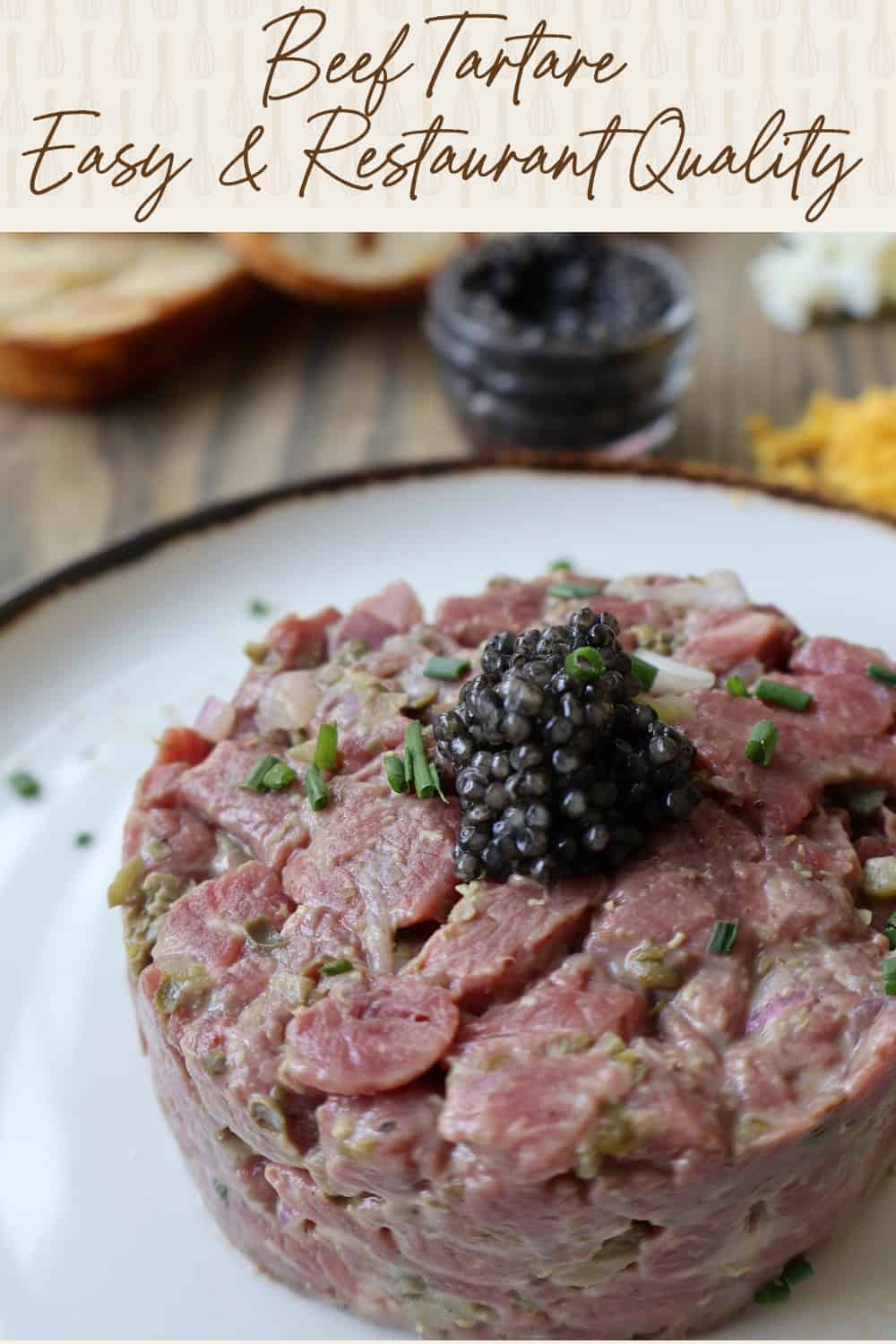
This beef tartare recipe is the one that finally made me stop ordering it out. It's made with filet, a few pantry staples, and takes maybe ten minutes from start to finish - yet somehow it tastes exactly like the kind of dish you order at a dimly lit little bistro with a glass of red wine and good bread on the table.
I think people overcomplicate tartare because it sounds fancy, but it's actually incredibly simple. Good beef, sharp Dijon, briny capers, shallot, olive oil, flaky salt - that's really the whole story. Once you make it at home, you realize the magic is less about technique and more about balance.

This is the kind of dinner I make when I want someone to feel special without spending hours in the kitchen. It feels a little dramatic in the best way - cold silky beef, sharp Dijon, briny capers, crunchy grilled bread, and that rich egg yolk moment if you want the full bistro experience. It's simple, but it makes the table feel like an occasion.
Serve it with toasted bread buttered generously and something bright on the side, like my strawberry salad, and suddenly dinner feels elevated in that effortless way. It's simple, dramatic, and honestly one of the easiest impressive meals you can make at home.
Watch the full reel on Instagram → @whisk__and_wine
Beef Tartare Ingredients
This is a stripped-down classic-filet, mustard, briny aromatics, and Worcestershire. The accoutrements are where you can be a little extra. See the recipe card below for exact quantities.
For the Tartare
- Filet mignon (or beef tenderloin)
- Shallot, finely chopped
- Cornichons, finely chopped
- Capers, finely chopped
- Dijon mustard
- Worcestershire sauce
For the Accoutrements
- Hard-boiled eggs (yolks and whites separated, finely chopped)
- Chives or red onion, finely minced
- Caviar (optional, for the full bistro version)
- Quail egg (optional, raw, served on top)
- Crusty bread, butter, flaky salt
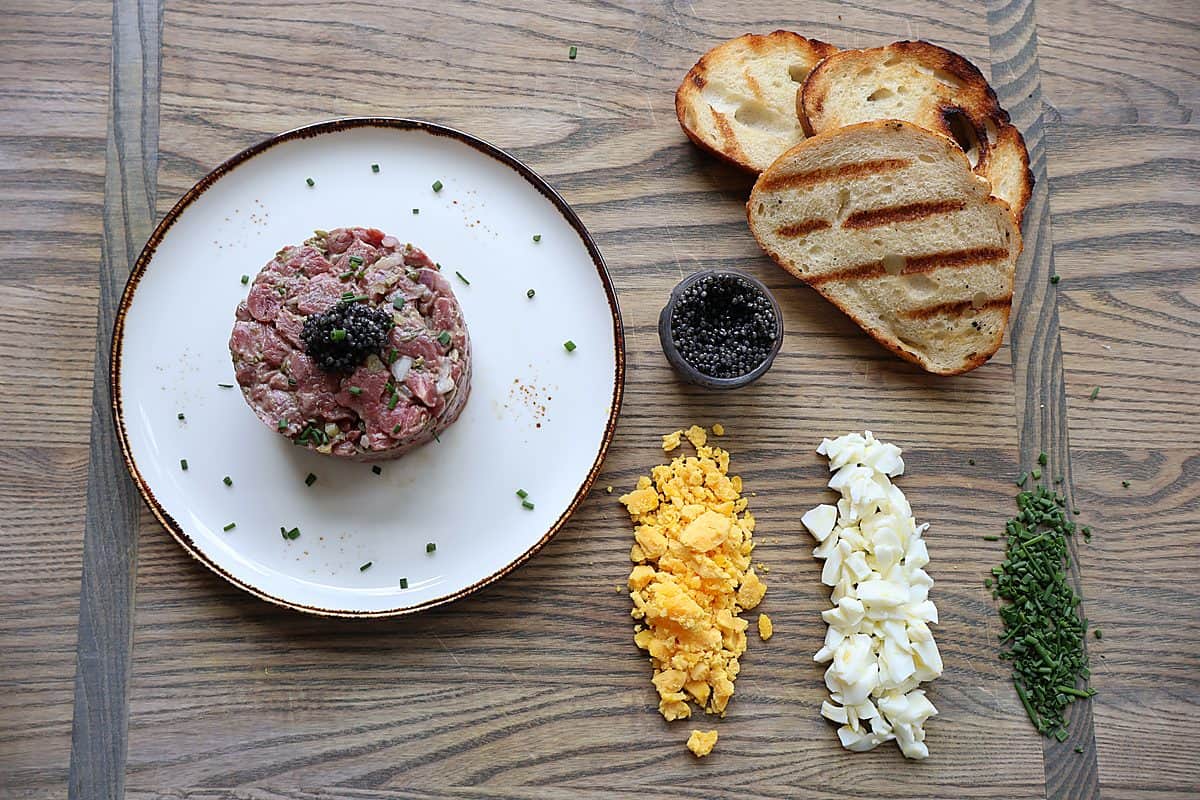
See the recipe card for exact quantities.
Why You'll Love This Beef Tartare Recipe
Six things make this version different from the chef's-table-only impression you've been given.
- Ten-minute prep. No cooking the protein, no resting, no marinating-just chop and mix.
- Restaurant-quality flavor. Filet plus Dijon plus brine is a pro-level combination at a home-cook price.
- Pantry-friendly. If you've made a sandwich, you already own most of this list.
- Endlessly customizable. Caviar and quail egg if you're showing off. Plain if you're not. Both work.
- Crowd-stopper. This is the appetizer people remember at a dinner party. They will ask for the recipe.
- Naturally gluten-free, low-carb, high-protein. Skip the bread and serve with cucumber or endive spears for a clean version.
How to Make Beef Tartare
The whole game is sharp knife, cold beef, and gentle hands.
Chill the Filet
Wrap the 8 oz filet in plastic wrap and freeze for 15 to 20 minutes until firm at the edges but not frozen through. Cold beef cubes cleanly; warm beef tears and goes mushy.
Hand-Dice the Beef
Pull the filet from the freezer. Slice against the grain into ¼-inch slabs, then into ¼-inch matchsticks, then into ¼-inch cubes. Move the diced filet to a chilled bowl.
Chop the Aromatics
Finely chop 2 tablespoons shallot, 1 tablespoon cornichons, and 1 tablespoon capers.
Mix the Tartare
Add the chopped shallot, cornichons, and capers to the beef. Add 1 tablespoon Dijon and 1 teaspoon Worcestershire. Season with salt & pepper. Fold gently with a spoon-do not mash. You want each cube of beef coated, not crushed.
Prep the Accoutrements
Peel eggs. Separate yolks from whites. Chop the yolks very, very fine. Chop the whites the same way. Set everything in small piles.
Butter and Toast the Bread
Slice a baguette on a sharp diagonal, ½-inch thick. Butter generously on both sides-don't be shy. Grill or, toast in a hot cast-iron skillet over medium-high until deeply golden and crisp at the edges, about 2 minutes per side.
Plate It
Mound the tartare in the center of a chilled plate. Use a ring mold if you have one and want it to look like a restaurant. Surround the tartare with small piles of chopped egg yolk, egg white, and minced onion or chives. Optional: spoon a small mound of caviar in the center, crack a raw quail egg right on top, and finish with flaky salt. Serve immediately with the hot toasted bread.
Substitutions
Tartare is forgiving once you keep the structure-lean beef, sharp acid, briny aromatic. Here's what to swap if you're missing something.
- Filet mignon → Top sirloin trimmed clean. Avoid anything with gristle or fat marbling-you'll feel it.
- Cornichons → Finely chopped dill pickles, drained well. They're sweeter, so cut the amount by ¼ if your pickles are bread-and-butter.
- Dijon → Spicy brown mustard. Skip yellow-too sweet, too soft. You need the bite.
- Worcestershire → Fish sauce or anchovy paste. Start with ¼ teaspoon and adjust-both are stronger.
- Shallot → Finely minced red onion. Slightly sharper, but it works.
Variations
Once you've nailed the classic, riff. The base ratio holds-just swap flavor pillars.
- Asian tartare. Replace Worcestershire with 1 teaspoon soy sauce + ½ teaspoon sesame oil. Top with chili crisp and sliced scallion.
- Italian tartare. Skip cornichons, add 1 tablespoon chopped sun-dried tomato and 1 tablespoon finely chopped parsley. Finish with shaved Parmigiano.
- Spicy tartare. Add a dash of hot sauce and ½ teaspoon finely chopped jalapeño with the aromatics.
- Herby tartare. Fold 1 tablespoon chopped fresh tarragon and 1 tablespoon chopped fresh parsley into the mix at the end.
- Carnivore-style. Skip the bread entirely. Serve with cucumber rounds, endive spears, or pickled vegetables.
Equipment
Tartare doesn't ask much from your kitchen-but it asks for a sharp knife. Everything else is supporting cast.
- Misen 8" Chef Knife - Premium. This is non-negotiable. A dull knife crushes the meat instead of cutting it, and you end up with paste. I sharpen mine before every tartare.
- Victorinox Fibrox Pro 8" Chef Knife - Budget. The chef-school standard. Holds an edge well enough for hand-dicing, costs a third of premium options.
- John Boos Maple Cutting Board - Premium. Heavy edge-grain maple, USA-made, lasts forever. The weight matters here-you don't want a board sliding around while you're trying to dice cold beef.
- Greener Chef XL Bamboo Cutting Board - Budget. Heavy enough to stay put, food-safe, no PFAS or formaldehyde glues. The non-toxic version of the cheap board.
- Lodge 10.25" Cast Iron Skillet. For grilling the buttered bread until the crust shatters. Pre-seasoned, PFAS-free, lasts decades. The single most-used pan in my kitchen.
- HULISEN Tartare Plating Rings. Want the restaurant mound? This is the trick. Pack the tartare in, lift the ring straight up. Looks like you spent $120 on dinner.
- Pyrex Glass Mixing Bowl Set. Glass is non-reactive-it won't pick up flavor from the Dijon or capers. Chill the bowl in the fridge before mixing for an extra five minutes of cold.
Storage
This is the section where I have to be the buzzkill: tartare is a same-day dish. Raw beef plus raw egg plus salt and acid is a clock. The flavor is best within an hour of mixing, and the food-safety window is two hours at room temperature. If you absolutely have to hold it, mix everything except the salt and acid, refrigerate covered, and add the Dijon and Worcestershire right before serving-but really, just make it when you're ready to eat. Don't freeze it. Don't reheat it. Don't bring leftovers to lunch the next day.
Top Tip
Freeze the filet for 15 to 20 minutes before you start dicing. Cold beef cubes cleanly into ¼-inch pieces; room-temperature beef tears, smears, and turns into ground meat. This single move is the difference between bistro tartare and sad tartare. Your knife also needs to be sharp-if you can't shave a tomato with it, sharpen it before you start.
Beef Tartare FAQ
The questions readers ask most about making tartare at home-answered.
Yes, when you start with fresh, high-quality beef from a butcher you trust. Tell your butcher you're making tartare so they cut from the cleanest, most recently broken-down part of the tenderloin. Eat it within two hours of mixing, keep it cold, and don't use beef that's been sitting in your fridge for days. Pregnant people, very young children, and immunocompromised folks should skip it.
Filet mignon (also called beef tenderloin) is the gold standard-it's lean, tender, and has almost no gristle, which matters when you're eating it raw. Top sirloin works in a pinch if you trim it well. Avoid anything fatty (ribeye, strip)-the fat reads weird at room temp.
Not really. Acid and salt start breaking down the beef the moment you mix everything together, and the texture goes from clean and bouncy to slack and mushy within an hour or two. You can dice the filet up to two hours ahead and chop the aromatics earlier in the day, but combine everything within 30 minutes of serving for the best result.
No. The traditional bistro presentation includes a raw egg yolk (or quail egg) cracked into the well at the top of the tartare mound, but it's optional. The recipe itself doesn't include raw egg in the mix-that's a finishing flourish. Skip it if you'd rather not, and the dish still works.
More from Whisk & Wine
If you liked this beef tartare, you'll love these other dinner-party-worthy recipes I make on repeat.


More Beef & Lamb Recipes
Tartare scratching the steak itch? Here's the rest of the beef and lamb file at Whisk & Wine.
Print📖 Recipe
Classic Beef Tartare
- Total Time: 20 minutes
- Yield: 2 appetizer servings (or 1 entrée) 1x
Description
Restaurant-quality beef tartare made at home in 10 minutes-filet mignon hand-diced with shallot, capers, cornichons, Dijon, and Worcestershire. Served with grilled buttered bread and classic accoutrements. The classic French bistro appetizer, made simple at home.
Ingredients
For the Tartare
- 8 oz filet mignon, very cold, finely diced (¼-inch cubes)
- 2 tablespoons shallot, finely chopped
- 1 tablespoon cornichons, finely chopped
- 1 tablespoon capers, finely chopped
- 1 tablespoon Dijon mustard
- 1 teaspoon Worcestershire sauce
- Flaky salt and freshly cracked black pepper, to taste
For the Accoutrements
- 2 large eggs, hard-boiled, yolks and whites separated and finely chopped
- 2 tablespoons fresh chives, finely minced (or red onion)
- 1 tablespoon caviar (optional)
- 1 raw quail egg (optional, served on top)
- ½ baguette, sliced ½-inch thick on the bias
- 3 tablespoons unsalted butter, softened
 Get Recipe Ingredients
Instructions
- Wrap the 8 oz filet in plastic wrap and freeze for 15 minutes until firm but not frozen through.
- Place 2 eggs in cold water, bring to a boil, cook 9 minutes, then transfer to an ice bath for 5 minutes. Peel.
- Remove the filet from the freezer. Slice against the grain into ¼-inch slabs.
- Cut the slabs into ¼-inch matchsticks, then into ¼-inch cubes. Transfer the diced beef to a chilled bowl and return to the refrigerator.
- Finely chop 2 tablespoons shallot, 1 tablespoon cornichons, and 1 tablespoon capers. Mince them small.
- Add the shallot, cornichons, capers, 1 tablespoon Dijon, and 1 teaspoon Worcestershire to the chilled beef. Fold gently to coat. Season with flaky salt and pepper.
- Separate the hard-boiled egg yolks from the whites. Finely chop each separately. Mince the chives.
- Slice the baguette ½-inch thick on the bias. Butter both sides generously.
- Heat a cast-iron skillet over medium-high. Toast the bread 2 minutes per side until golden and crisp.
- Mound the tartare in the center of a chilled plate, using a ring mold for a clean shape. Surround with small piles of chopped yolk, white, and chives.
- Optional: top with a spoonful of caviar and crack a raw quail egg over the mound. Finish with flaky salt.
- Serve immediately with the hot toasted bread alongside.
Notes
Buy your filet from a butcher you trust and tell them it's for tartare so they cut from the cleanest part of the tenderloin. Eat within 2 hours of mixing. Do not refrigerate leftovers-raw beef plus acid plus salt is a clock.
Top Tip: Freeze the filet for 15-20 minutes before dicing. Cold beef cubes cleanly into ¼-inch pieces; warm beef tears and turns mushy. This single move is the difference between bistro tartare and sad tartare.
- Prep Time: 15 minutes
- Cook Time: 5 minutes
- Category: Appetizer
- Method: No-Cook
- Cuisine: French
Comments
No Comments