
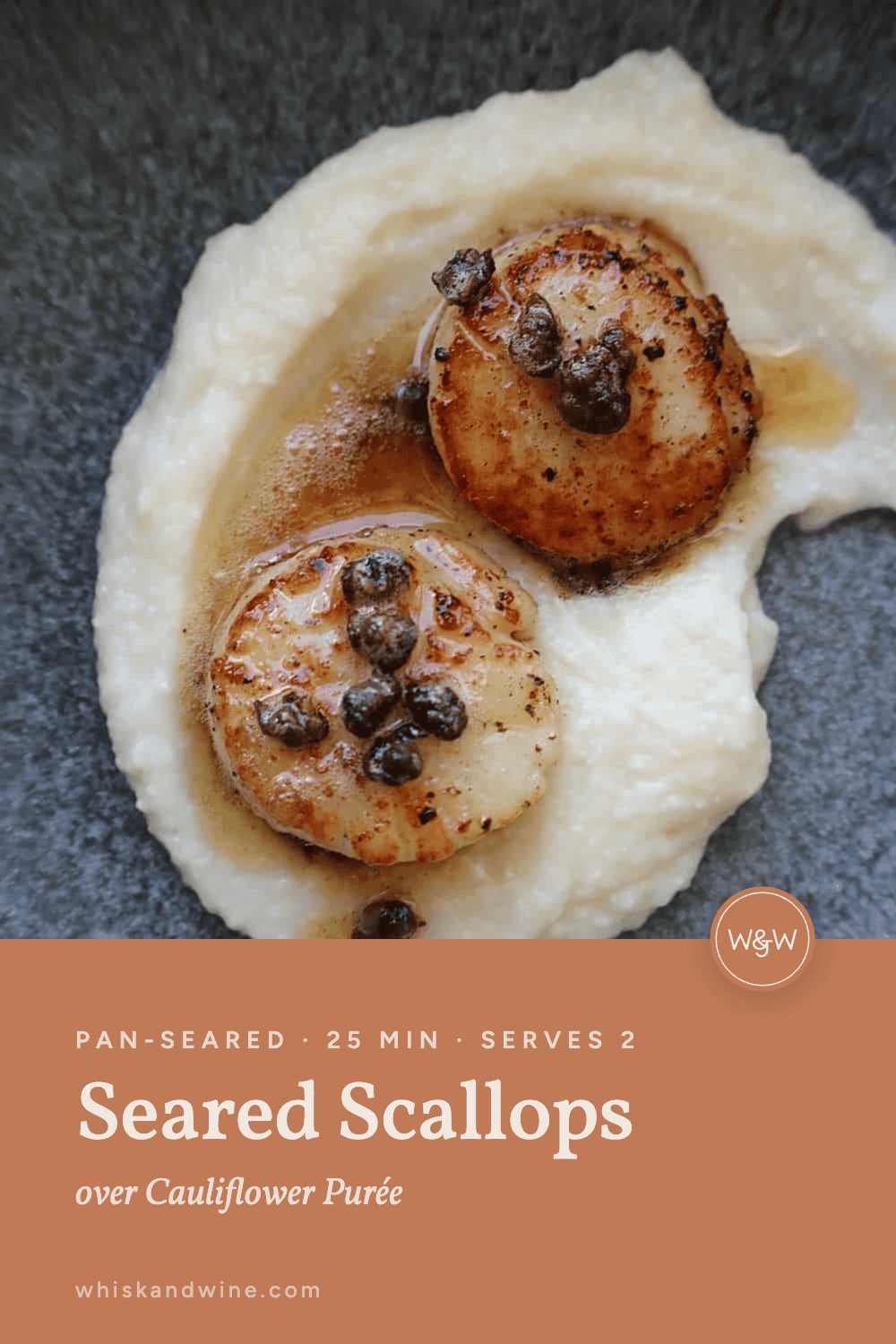
Scallops scared me for years. I overcooked them, I crowded the pan, I flipped too early and tore the crust right off. What finally fixed it was boring: a cast iron pan hot enough to scare you a little, and scallops dry enough to sear instead of steam. Get those two right and this seared scallops recipe is easy. I spoon them over a cauliflower puree — steamed cauliflower, parmesan, a little chicken stock — then pour caper brown butter over the top until everything goes glossy.

Pat them bone-dry until the surface feels tacky, salt them well, and leave them alone in ripping-hot oil for 90 seconds. If you like the idea of pulling off restaurant seafood at home, this lands in the same world as my creamy seafood scampi pasta, and it earns a spot on any date night dinner menu.
Watch the full reel on Instagram → @whisk__and__wine
Jump to:
Seared Scallops Ingredients
Three components, and the puree and the brown butter are both done before the scallops ever hit the pan. See the recipe card below for exact quantities.
For the cauliflower puree:
- Steamed cauliflower
- Parmesan
- Chicken stock
- Salt and pepper
For the caper brown butter:
- Unsalted butter
- Capers
For the seared scallops:
- Dry sea scallops
- Salt and pepper
- Neutral high-smoke-point oil
Why You'll Love These Seared Scallops
-
That golden, crackly crust - the part everyone assumes they can't do at home.
The cauliflower puree is silky and light. Parmesan and chicken stock do the work, no cream.
- Caper brown butter is two ingredients and tastes like a restaurant sauce.
- Naturally gluten-free and high in protein. On the plate it looks like something you ordered out. About 25 minutes.
How to Make Seared Scallops
Make the puree, brown the butter, then sear the scallops last so they hit the plate hot. Here's the order I work in.
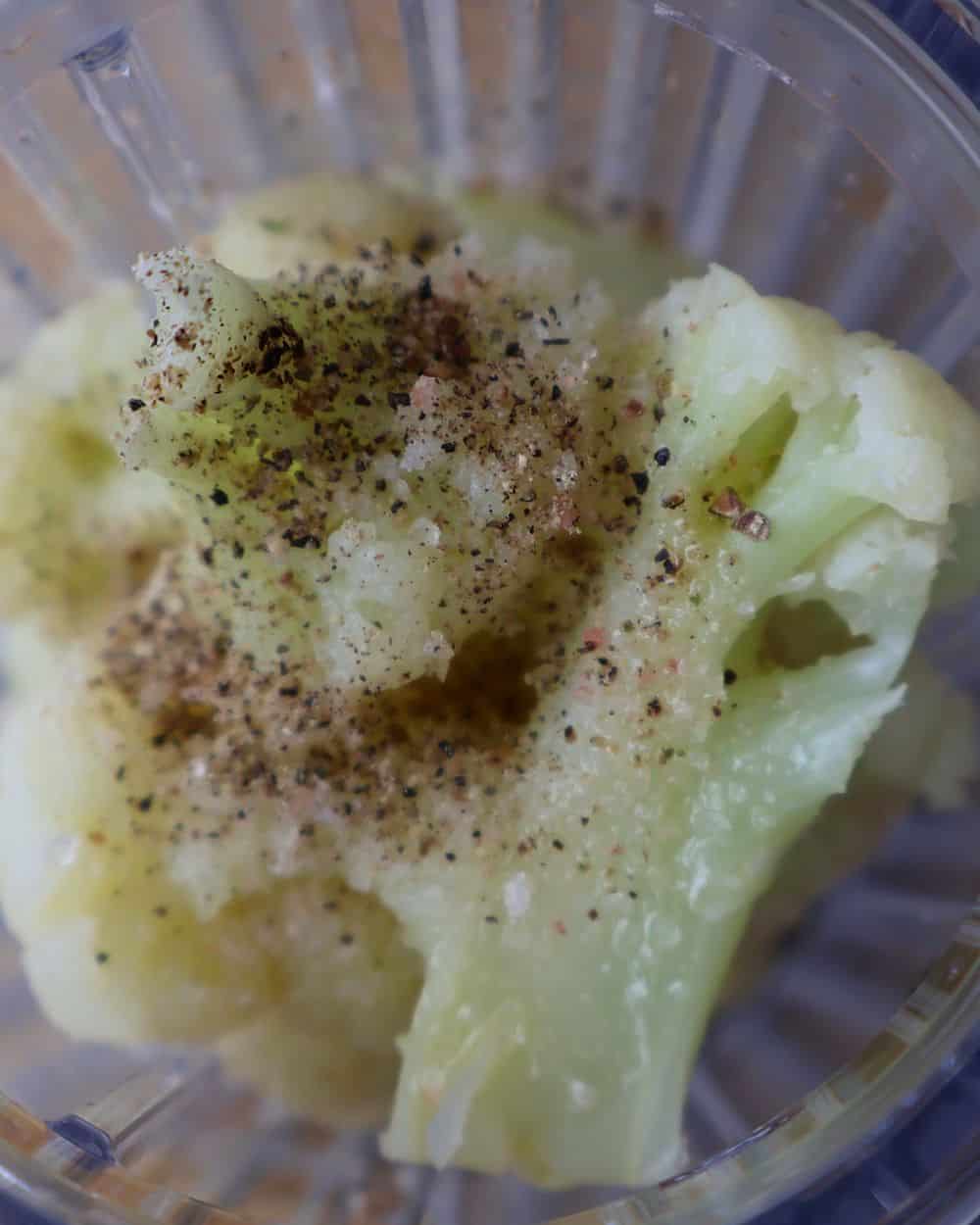
Make the cauliflower puree
Add the steamed cauliflower to a blender with the parmesan, salt, pepper, and chicken stock. Blend until smooth, then set aside covered to keep warm.
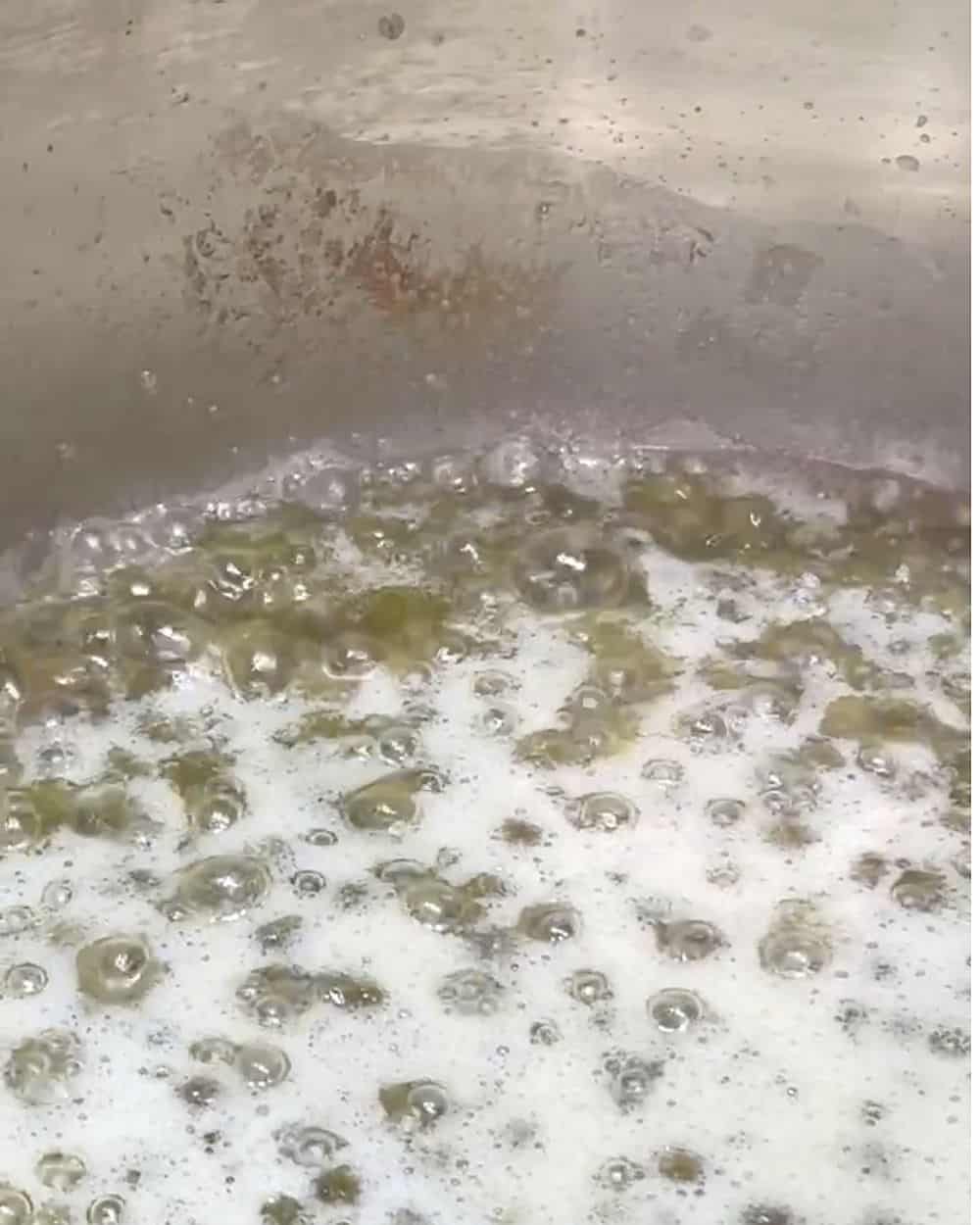
Make the caper brown butter
Add the butter and capers to a pan. Cook until the butter browns and the capers fry and crack apart, then set aside.
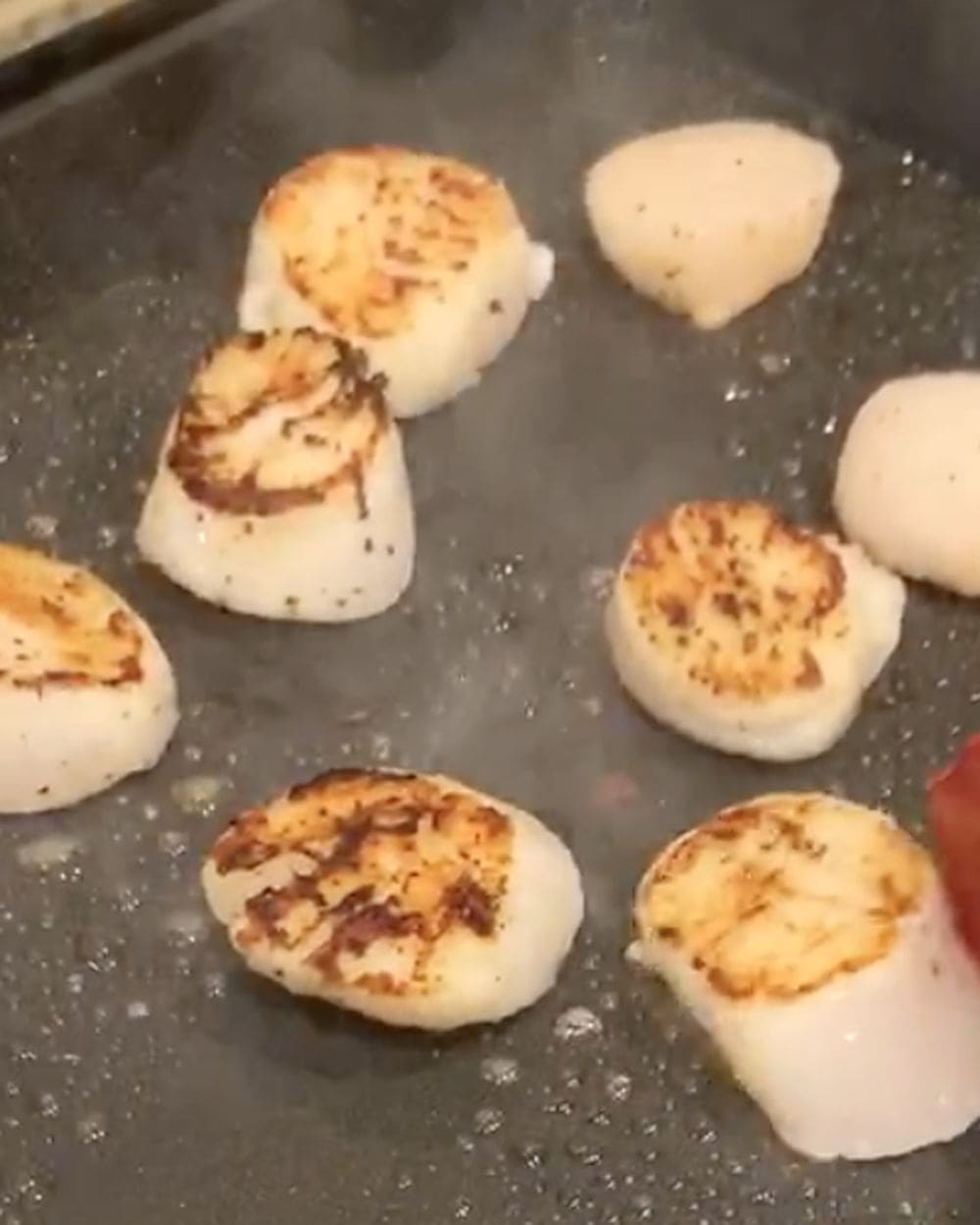
Sear the scallops
Pat the scallops very dry until tacky and season both sides. Heat a cast iron skillet with neutral oil until ripping hot, add the scallops, and sear 90 seconds without moving. Flip and cook 60 seconds more, then transfer to a plate.
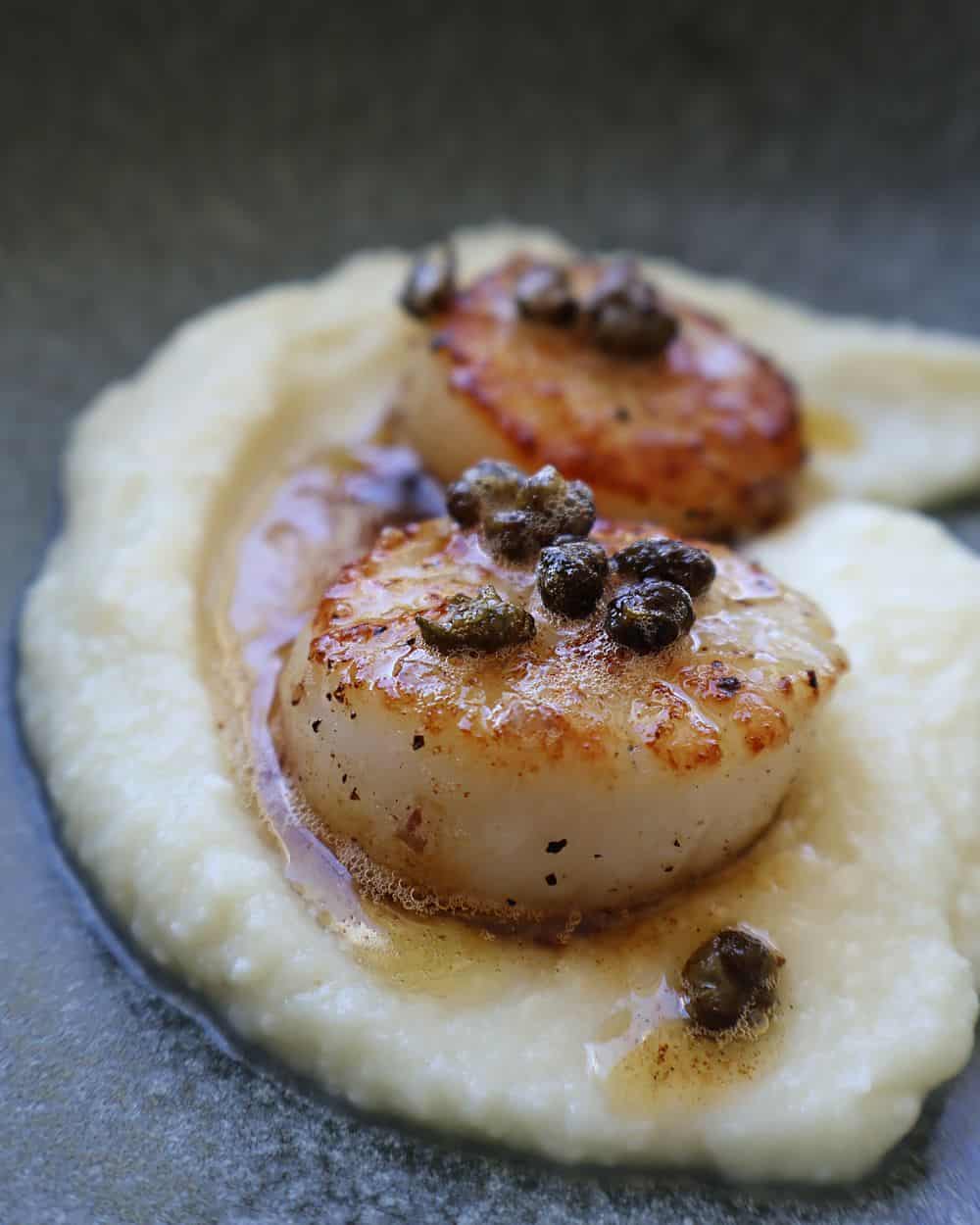
Serve
Spoon the cauliflower puree onto each plate and smear with the back of a spoon. Top with 3 scallops and spoon the caper brown butter over everything.
Substitutions
Easy swaps if your kitchen doesn't match mine:
- Sea scallops - Go for dry (dry-packed) sea scallops. Bay scallops are tiny and cook in seconds, so cut the sear time way down. Avoid "wet" scallops - they're treated with phosphates and refuse to brown.
- Parmesan - Grana Padano or Pecorino Romano both work; Pecorino reads saltier, so pull back on added salt.
- Chicken stock - Vegetable stock keeps it vegetarian; a splash of warm water works in a pinch if you want the cauliflower flavor to lead.
- Cast iron - A stainless or carbon steel skillet works too. Just not nonstick - it won't get hot enough for a real crust.
Variations
Once the method is yours, the plate goes a few directions:
- Pea puree - Swap the cauliflower for a bright green pea puree. Same method, totally different plate.
- Balsamic reduction - Streak a little balsamic reduction onto the plate before the puree for a sweet-tangy contrast.
- Garlic brown butter - Add a thinly sliced clove to the butter as it browns for a deeper, savory finish.
- Add greens - Wilt a handful of spinach into the puree at the blending stage.
- Make it a main - Plate more scallops per person and add a green salad for a full dinner.
Equipment
The crust lives or dies on your pan, and the puree only gets silky if you really blend it. These are what I use.
- Beast blender - This is what turns steamed cauliflower into something that looks like it came off a tasting menu. Powerful enough to get the puree glassy-smooth in seconds, and small enough to live on the counter.
- Cast iron skillet - Holds ripping-hot heat better than anything, which is exactly what a real scallop crust needs.
- Fish spatula - Thin and flexible so you can slide under a scallop and flip it without tearing the crust off.
- Microplane or fine grater - For grating the parmesan fine enough to melt smoothly into the puree.
Storage
- Store - Keep leftover scallops and puree in separate airtight containers in the fridge up to 2 days.
- Reheat - Warm the puree gently on the stovetop with a splash of stock, stirring. Scallops are best reheated quickly in a hot pan just to warm through - microwaving turns them rubbery.
- Freeze - The cauliflower puree freezes well up to 1 month; thaw and re-blend with a little stock. Cooked scallops don't freeze well after searing.
Top Tip
Pat the scallops VERY dry - three layers of paper towel, and actually press down. You want the surface to feel tacky to the touch before they go in the pan. That tackiness is the sign they'll crust instead of steam. Wet scallops (especially phosphate-soaked "wet" ones) release water the second they hit the oil, go gray, and never brown. Bone-dry is the single biggest difference between scallops that look like a restaurant's and scallops that look sad.
They cook fast. Sear 90 seconds on the first side until you get a deep golden crust, then flip and cook just 60 seconds more. They should feel barely firm with a little give, not bouncy. Overcooked scallops turn tough and rubbery, so pull them early.
Almost always one of three things: the scallops are wet, the pan isn't hot enough, or the pan is crowded. Pat them bone-dry until tacky, get the cast iron ripping hot, and leave space between each one so they sear instead of steam.
Yes. It reheats beautifully on the stovetop with a splash of stock to loosen it. Make it up to 2 days ahead and rewarm while you sear the scallops so everything lands hot.
The puree makes it a complete plate, but a streak of balsamic reduction underneath, a green salad, or crusty bread to mop up the brown butter all work. A crisp white wine doesn't hurt either.
More from Whisk & Wine
More recipes worth pulling into the rotation:


More Seafood Dinners to Try
More seafood I come back to when I want something that feels special without the fuss:


Seared Scallops Over Cauliflower Puree and Caper Brown Butter
- Total Time: 25 minutes
- Yield: 2 servings 1x
Description
Seared scallops with a golden cast-iron crust over a silky cauliflower puree, finished with nutty caper brown butter. An elegant, restaurant-quality seafood dinner that comes together in about 25 minutes.
Ingredients
For the cauliflower puree:
- 1 ½ cups steamed cauliflower
- ½ cup grated parmesan
- ¼ cup chicken stock
- Salt and pepper, to taste
For the caper brown butter:
- 4 tbsp unsalted butter
- 3 tbsp capers
For the seared scallops:
- 6 dry sea scallops (about 3 per serving)
- Salt and pepper
- 1-2 tablespoon neutral oil (grapeseed or avocado)
 Get Recipe Ingredients
Instructions
- Add the steamed cauliflower, parmesan, chicken stock, and a pinch each of salt and pepper to a blender.
- Blend until smooth. Set aside, covered, to keep warm.
- Add the butter and capers to a pan over medium heat.
- Cook until the butter browns and the capers fry and crack apart, about 3 to 4 minutes. Set aside.
- Pat the scallops very dry with paper towels (3 layers, pressing) until they feel tacky to the touch.
- Season the scallops with salt and pepper on both sides.
- Heat a cast iron skillet with neutral oil until ripping hot.
- Add the scallops and sear 90 seconds without moving them.
- Flip and cook 60 seconds more, then remove from the pan.
- Spoon the cauliflower puree onto each plate and smear with the back of a spoon. Top with 3 scallops and spoon the caper brown butter over.
Notes
Pat the scallops very dry - three layers of paper towel, pressing - until the surface feels tacky to the touch. That is the single biggest difference between a golden crust and gray, steamed scallops. For a sweet-tangy twist, streak a little balsamic reduction on the plate before the puree, or swap the cauliflower for a bright pea puree.
- Prep Time: 10 minutes
- Cook Time: 15 minutes
- Category: Dinner
- Method: Stovetop
- Cuisine: American
Comments
No Comments